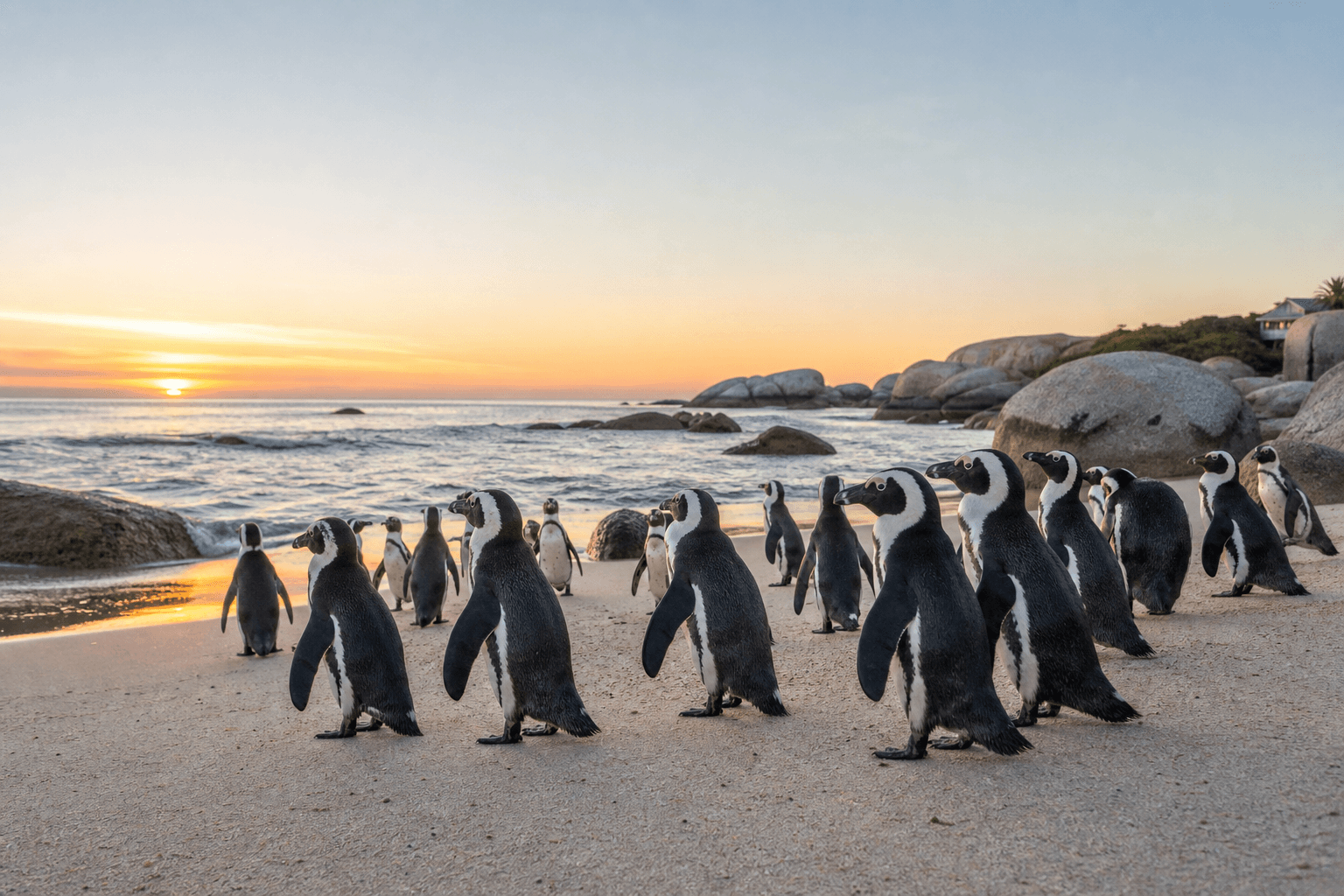
On 28 October 2024, SANCCOB announced that the African penguin had been newly classified as Critically Endangered after breeding-pair numbers fell below 10,000 across South Africa and Namibia. BirdLife South Africa and SANCCOB have warned that, without decisive intervention, the species could become functionally extinct in the wild by around 2035.
That date is not a slogan. It is a biological warning. A penguin chick that fledges in 2026 will need several years to survive at sea, return to a colony, find a mate, and raise chicks of its own. Recovery therefore has to begin before the breeding population collapses further.
The most urgent pressure point is food. African penguins feed heavily on small pelagic fish such as sardines and anchovies. When adults must travel farther from breeding colonies to find prey, they burn more energy, chicks wait longer between feeds, and abandoned chicks become more likely.
SAPA's 2035 Is Too Late campaign focuses on six practical asks: protect feeding zones around key colonies, strengthen fisheries management, fund rescue and rehabilitation capacity, restore safe nesting habitat, improve monitoring and public reporting, and reduce pollution and shipping risks.
The campaign is designed for action without panic. Supporters can sign the petition, fund field priorities, share school resources, and ask decision-makers to turn scientific warning into enforceable protection.
Sources tracked for this article include SANCCOB's 28 October 2024 Critically Endangered announcement, BirdLife South Africa campaign briefings, and African penguin litigation updates from conservation partners.
Turn this story into action.
Donate, sign the petition, or share this field note with someone who cares about ocean life.