
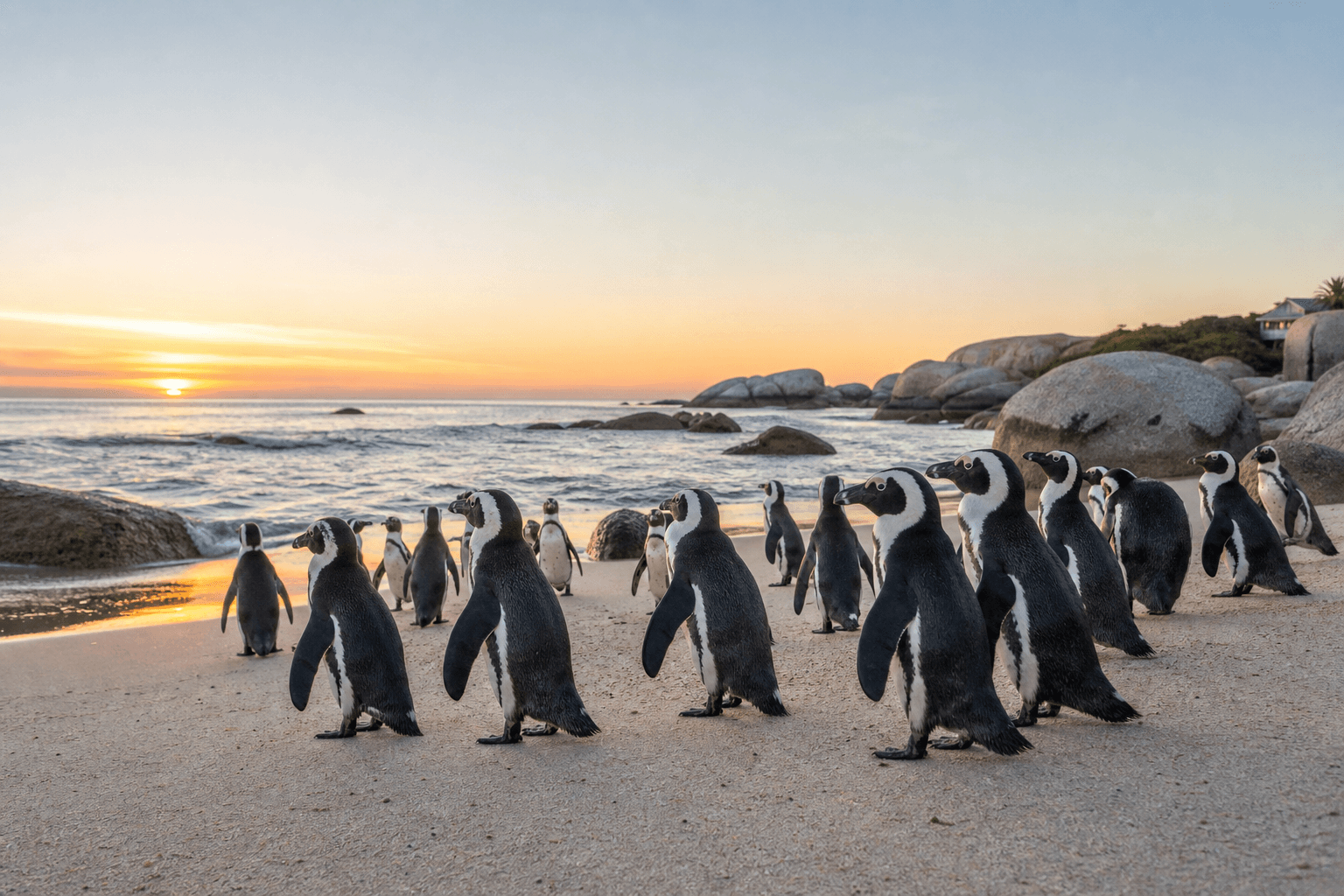
African penguins are easy to see on land, but the crisis is mostly unfolding offshore. Their survival depends on a marine food web shaped by sardines, anchovies, climate variability, fisheries decisions, and the distance between breeding colonies and prey.
When penguins struggle to feed chicks, they are signalling stress across a wider system. The same small pelagic fish that sustain penguins also support fisheries, coastal livelihoods, and larger marine predators. Conservation choices therefore have ecological and social consequences.
The strongest recovery work starts with better questions. Are adults traveling farther during breeding season? Are chicks growing more slowly? Are closed areas improving prey access? Are heat events changing nest success?
SAPA's research program supports monitoring that can be explained clearly to the public: breeding success, nest temperatures, prey-access summaries, partner release outcomes, and policy milestones.
A healthy penguin colony is not just a wildlife outcome. It is a sign that marine food webs, protected-area management, and public accountability are beginning to align.
Sources tracked for this article include IUCN Red List background, BirdLife International species accounts, small-pelagic fisheries research, and SAPA's 2026 monitoring framework.
Turn this story into action.
Donate, sign the petition, or share this field note with someone who cares about ocean life.