
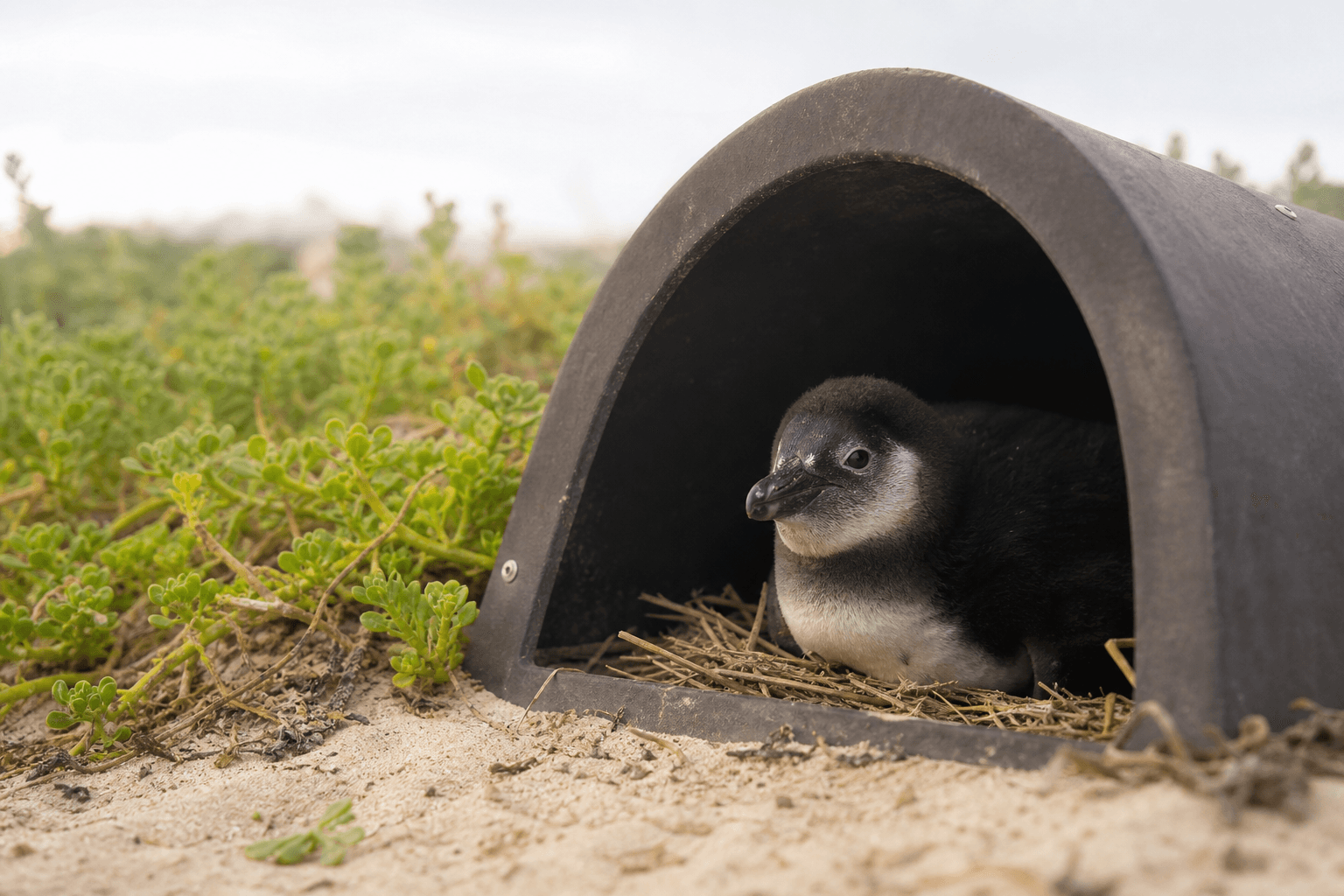
African penguins evolved to nest in sheltered burrows and cool scrapes. At many colonies, historic guano removal stripped away the material birds once used for natural burrows. Today, exposed nests face a second pressure: hotter, more volatile breeding conditions.
Artificial nests are not a silver bullet, but they can solve a very specific problem. A well-designed nest offers shade, reduces wind exposure, and can help eggs and chicks avoid lethal heat stress during vulnerable periods.
The details matter. A nest that works at one colony may fail at another if it is poorly oriented, too hot inside, badly drained, or not maintained. SAPA's habitat program therefore treats every deployment as both a conservation action and a learning opportunity.
In 2026, the alliance's habitat plan prioritizes nest replacements in heat-exposed areas, maintenance visits after winter storms, and simple thermal monitoring so partners can compare nest performance across sites.
Donation funding supports materials, local fabrication, transport, site preparation, and the monitoring time needed to know whether chicks actually benefit.
Sources tracked for this article include African penguin habitat restoration literature, partner nest-monitoring protocols, and the SAPA Habitat Restoration Workplan dated 12 June 2026.
Turn this story into action.
Donate, sign the petition, or share this field note with someone who cares about ocean life.