
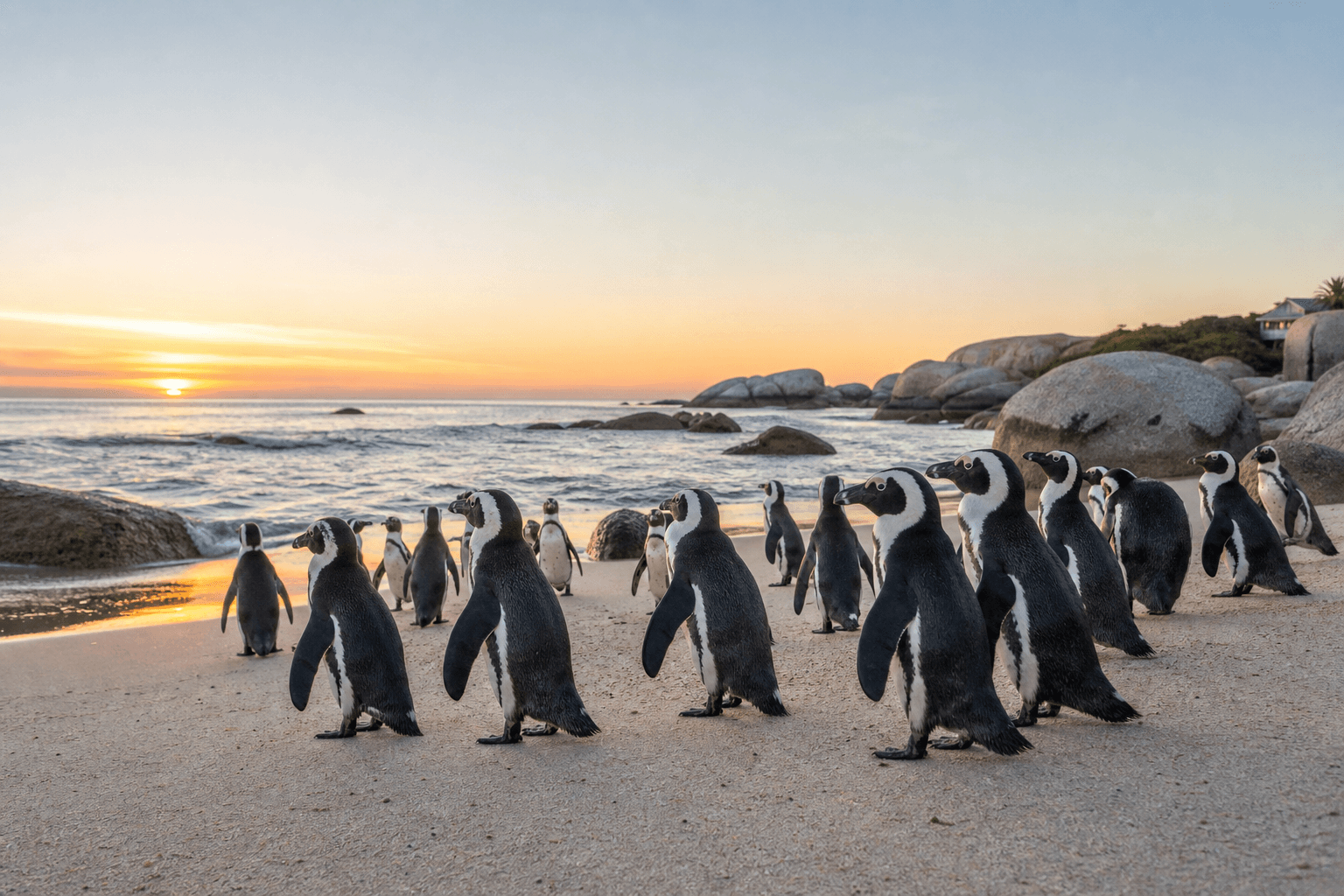
African penguins give teachers a rare bridge between biology, climate, geography, economics, citizenship, and hope. A single food-web lesson can connect sardines, anchovies, fisheries, coastal tourism, pollution, heat stress, and public policy.
The first way schools can help is by learning the crisis accurately. SAPA's fact sheet explains what Critically Endangered means, why prey availability matters, and how nesting habitat affects chick survival.
The second is responsible tourism. Learners can create visitor-guidance posters that remind families to keep distance, stay on marked paths, avoid feeding wildlife, and respect protected areas.
The third is citizen action. Classes can sign the petition, write evidence-based letters, or hold a World Penguin Day assembly that centers practical recovery asks rather than doom.
The fourth is fundraising with dignity. A symbolic adoption, read-a-thon, or ocean day can fund nests, education packs, and rescue support without exploiting distressing images.
The fifth is local pride. Coastal schools can become ambassadors for clean beaches, safe viewing, and the idea that recovery is still possible when communities are invited into the work.
Sources tracked for this article include SAPA's 2026 Education Hub curriculum plan, SANCCOB education materials, and responsible wildlife tourism guidance.
Turn this story into action.
Donate, sign the petition, or share this field note with someone who cares about ocean life.